1. What you need to earn
Add up, for one year:
- The net income you want to keep for yourself.
- Your business expenses: equipment, software, insurance, accountant, travel, coworking, training.
- Then gross it up for taxes and social contributions: if about 25 % of your revenue goes to them, divide by 0.75.
Using the tool step by step
The numbered marks on the screenshots follow the order in which you use the tool. The fields are filled with an example.
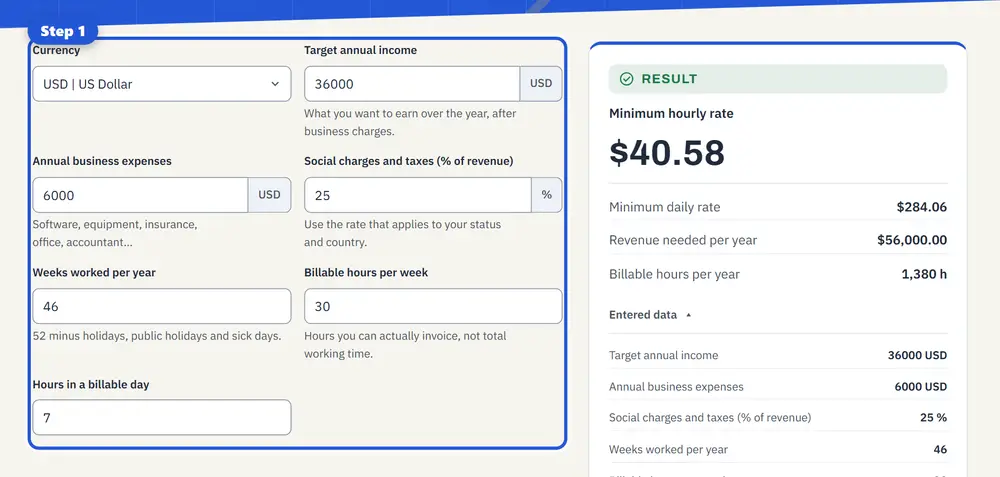
Step 1 Enter your values: dimensions, materials and options. 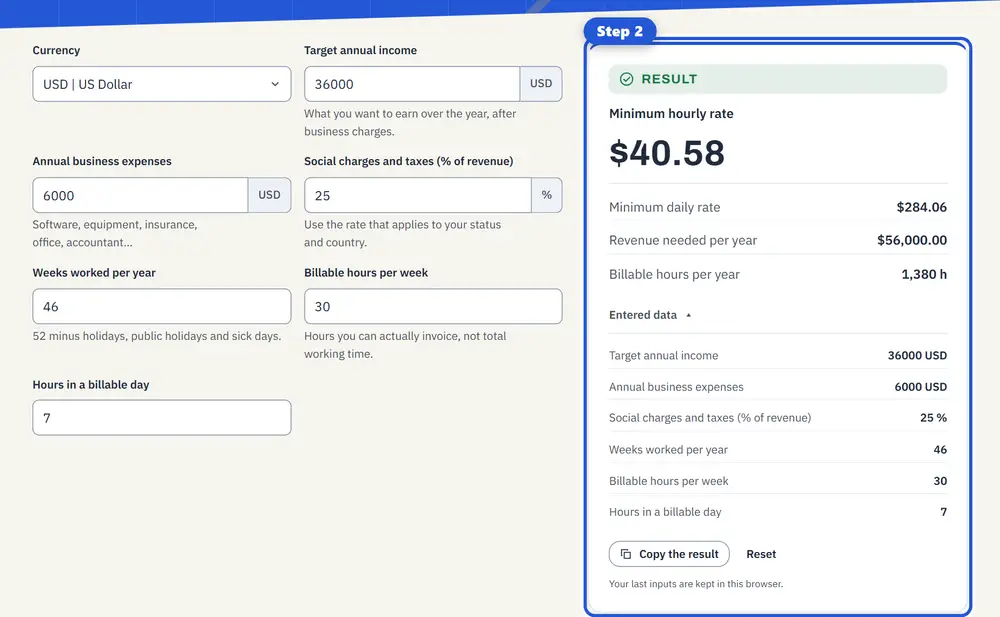
Step 2 Read the results: quantities, costs and estimated durations, updated as you type. 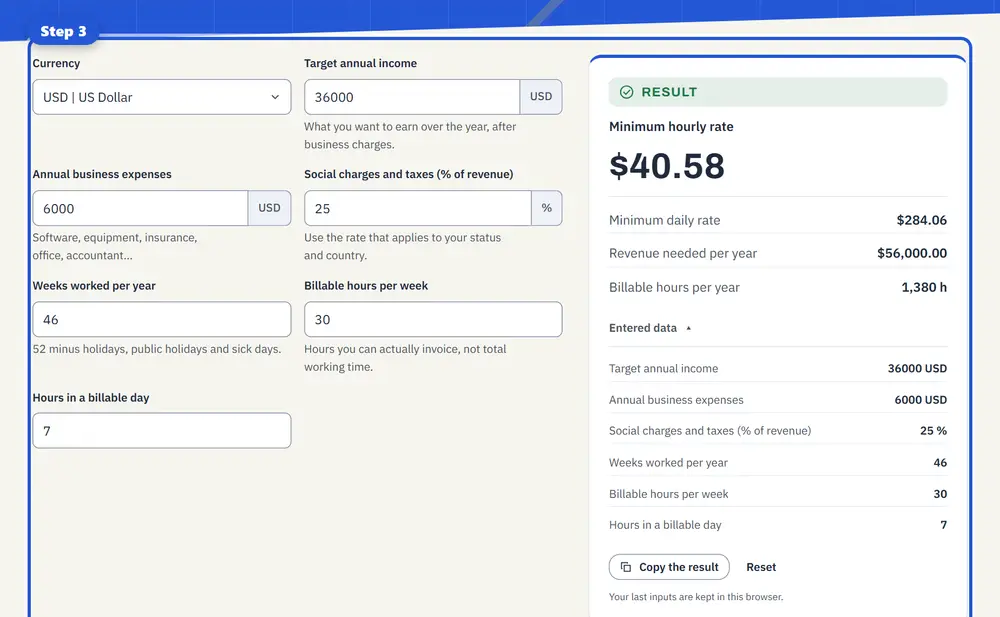
Step 3 Print, copy the result or save it as a PDF.
2. Your real billable hours
Count the weeks you can actually bill: 52 minus holidays, public holidays, sick days and quiet periods, often around 44 to 47 weeks.
Then the hours you can bill each week: prospecting, quotes, invoicing, admin and training are not paid. Many freelancers bill 25 to 30 hours out of 40 worked.
Worked example
Target 36,000 net, 6,000 of expenses, about 25 % of taxes and contributions, 46 weeks of 30 billable hours:
- Revenue needed: (36,000 + 6,000) ÷ 0.75 = 56,000.
- Billable hours: 46 × 30 = 1,380 hours.
- Minimum hourly rate: 56,000 ÷ 1,380 ≈ 40.58; day rate for 7 hours ≈ 284.
From minimum rate to selling price
This is your floor, not necessarily your price: compare it with the market for your skills and your clients, and keep a margin for slow months. Quote fixed prices when the scope is clear, and state your rate and the payment terms in every quote.
Tax and contribution rates depend on your country and status: check them with your accountant or the official sources before relying on a figure.
General information, checked at the date shown. It does not replace advice from a professional for your situation.