What a quote contains
A complete quote shows:
- The word “Quote”, a unique number and the date of issue.
- Your business details and legal identifiers, and the client’s name and address.
- A subject or project line (e.g. “Bathroom renovation, Villa 12”).
- Each item: precise description, quantity, unit, unit price, discount if any. Group long lists under titles (I. Demolition, II. Finishing…).
- The applicable tax rates and the totals before and after tax.
- The validity period (30 days is common) and the expected start or delivery date.
- The payment terms: deposit on order, balance and payment methods.
Using the tool step by step
The numbered marks on the screenshots follow the order in which you use the tool. The fields are filled with an example.
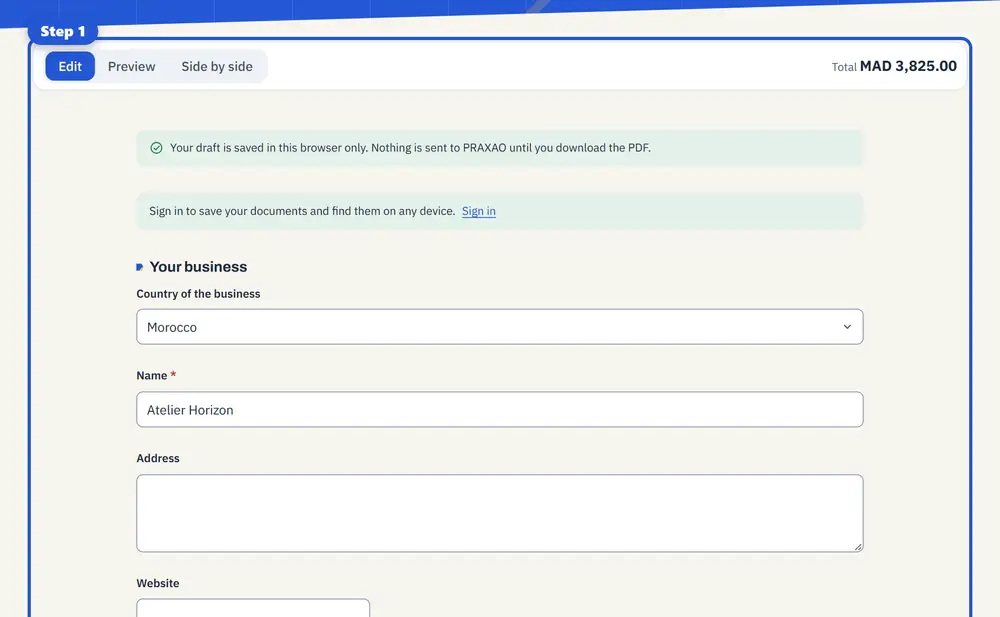
Step 1 Enter your values: dimensions, materials and options. 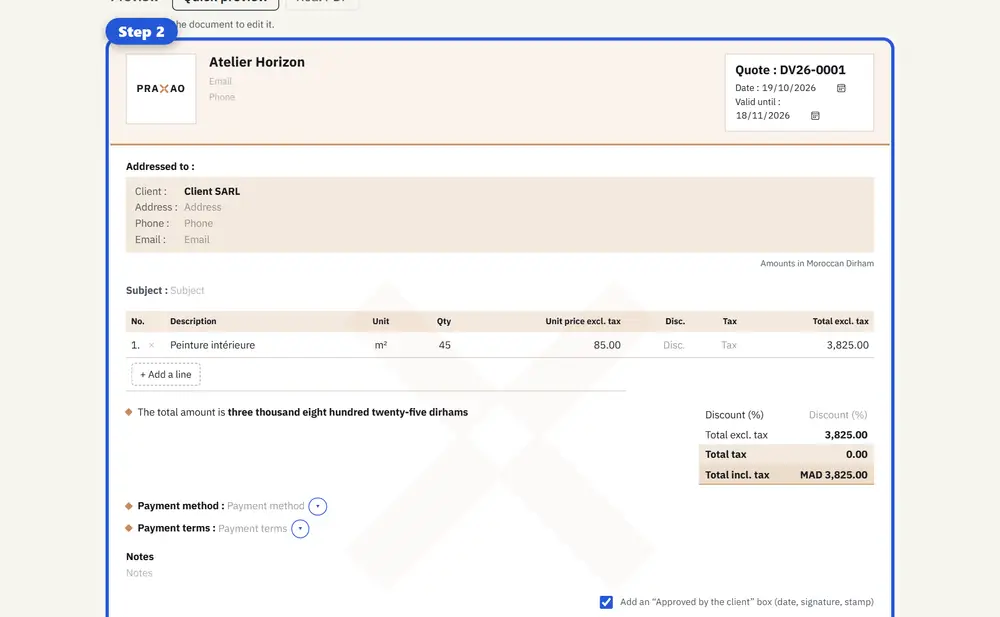
Step 2 Check the preview of the document as it will be sent. 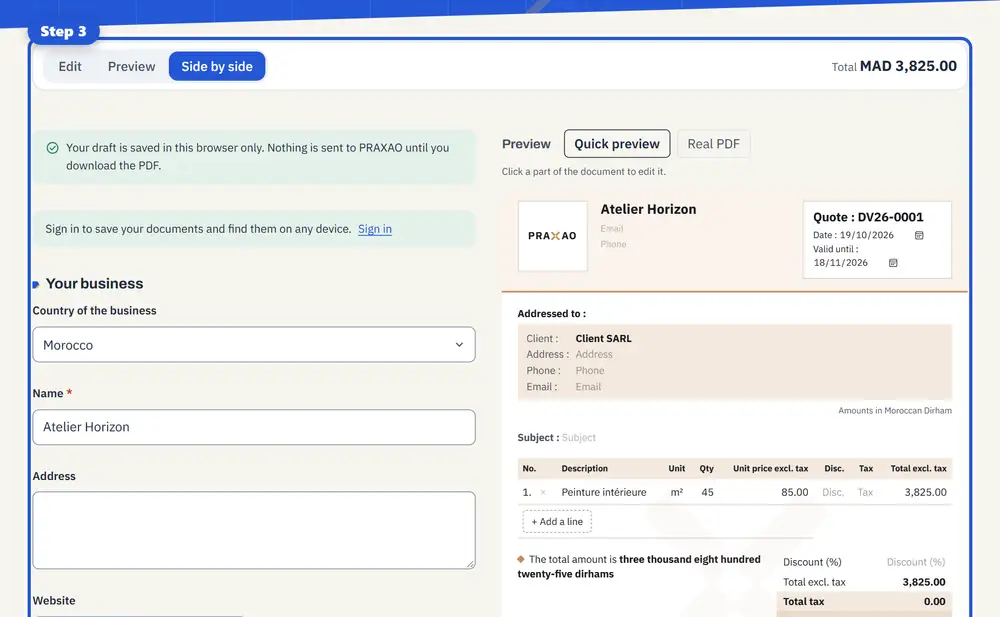
Step 3 Edit the fields and watch the document update side by side.
Validity, deposit and approval
Prices of materials and labour change: a validity date protects you. Asking a deposit on order (often 20 to 40 %) secures the client’s commitment and finances the first purchases.
Add an “Approved by the client” box with date, signature and stamp: a quote signed with this mention is the client’s order and has contractual value in most countries.
From quote to invoice
Once the quote is accepted, the invoice repeats the same lines. Mention the quote number on the invoice and deduct any deposit already received, so the client sees the balance due.
In PRAXAO, a saved quote becomes an editable invoice in one click, with the quote reference filled in.
Good habits
Describe the work precisely (materials, brands, surfaces) rather than “miscellaneous work”. Separate options from the base price. Keep every quote, signed or not: it documents your prices and helps you estimate the next jobs.
This guide is general information: some trades and countries impose specific mentions. Check the rules that apply to your activity.
General information, checked at the date shown. It does not replace advice from a professional for your situation.