Weight per metre by diameter
A bar weighs its cross-section × the density of steel (7,850 kg/m³), about d² ÷ 162 with d in mm. Usual values:
- Ø6: 0.222 kg/m · Ø8: 0.395 kg/m · Ø10: 0.617 kg/m
- Ø12: 0.888 kg/m · Ø14: 1.208 kg/m · Ø16: 1.578 kg/m
- Ø20: 2.466 kg/m · Ø25: 3.853 kg/m
Using the tool step by step
The numbered marks on the screenshots follow the order in which you use the tool. The fields are filled with an example.
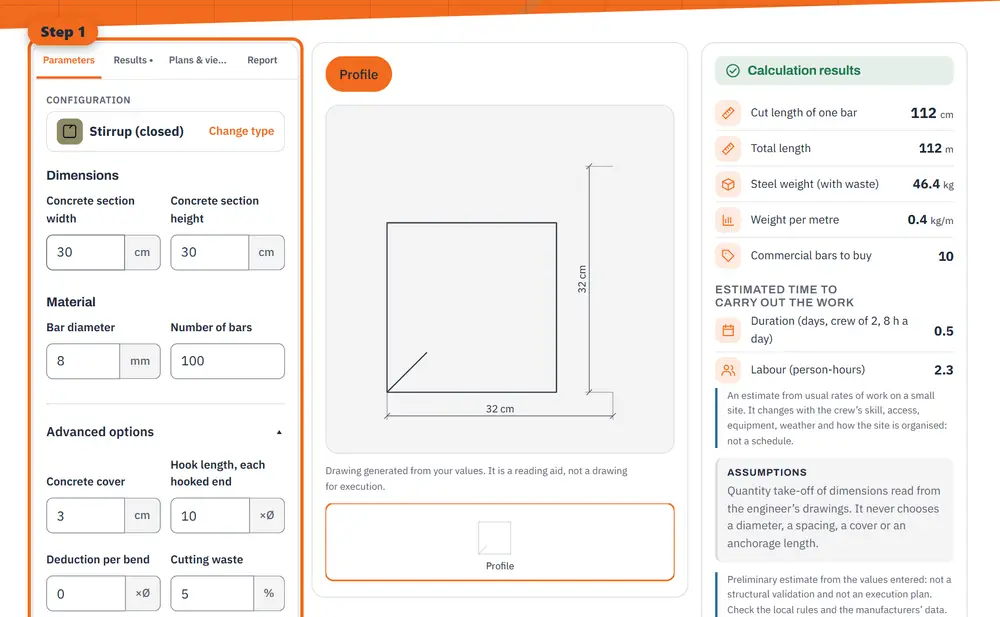
Step 1 Enter your values: dimensions, materials and options. 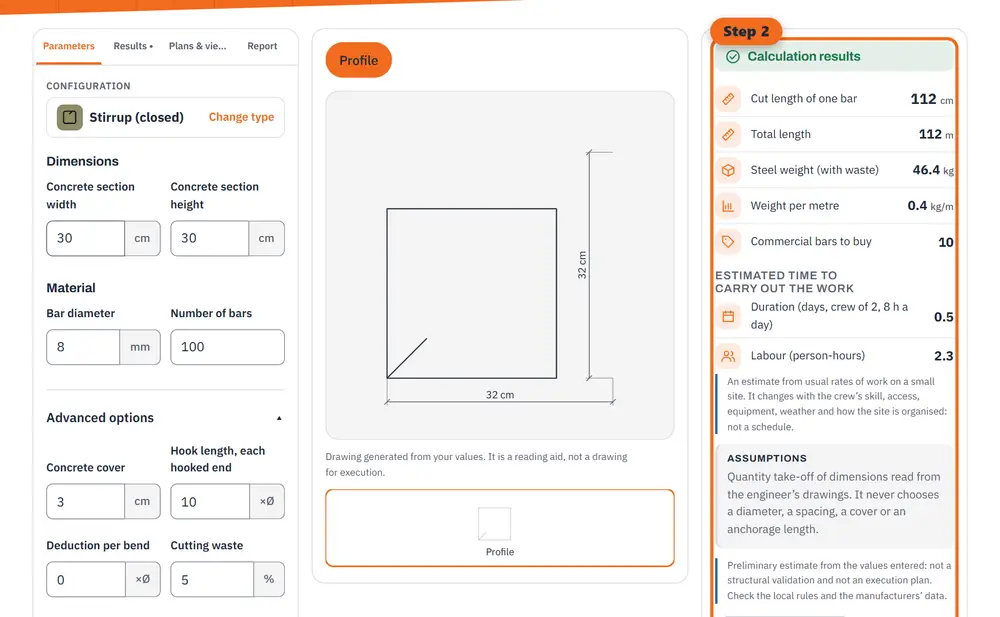
Step 2 Read the results: quantities, costs and estimated durations, updated as you type. 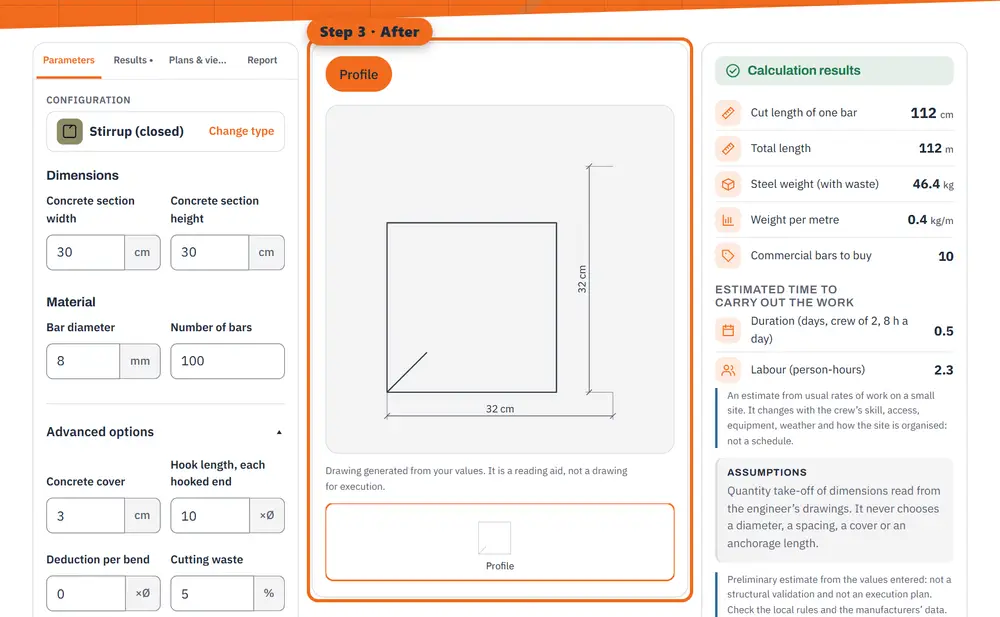
Step 3 After: the 3D rendering of the finished work (an illustration made by the tool, not a photo).
Total length, laps and waste
Add up the length of every bar of the same diameter from your plans: number of bars × length of each. Where bars are joined, count the lap length, often 40 to 50 times the diameter; your engineer’s plans give the exact value.
Then add a margin for cutting losses, usually around 5 %, and divide by the bar length sold (often 12 m) to know how many bars to buy.
Worked example
40 bars of 6 m in Ø12, 5 % waste, bars sold in 12 m:
- Length: 40 × 6 = 240 m; with 5 %, 252 m.
- Weight: 252 × 0.888 ≈ 223.7 kg.
- Bars: 252 ÷ 12 = 21 bars of 12 m.
- Stirrups in Ø8, 150 m in total: 157.5 m with waste, about 62 kg, 14 bars.
Good practice
Estimate each diameter separately, then add the weights for the order. Keep the bar schedule of the plans as the reference: cover, anchorage and spacing are structural choices that only the design can set.
The concrete calculator gives the volume and the cement, sand and gravel of the same elements.
General information, checked at the date shown. It does not replace advice from a professional for your situation.